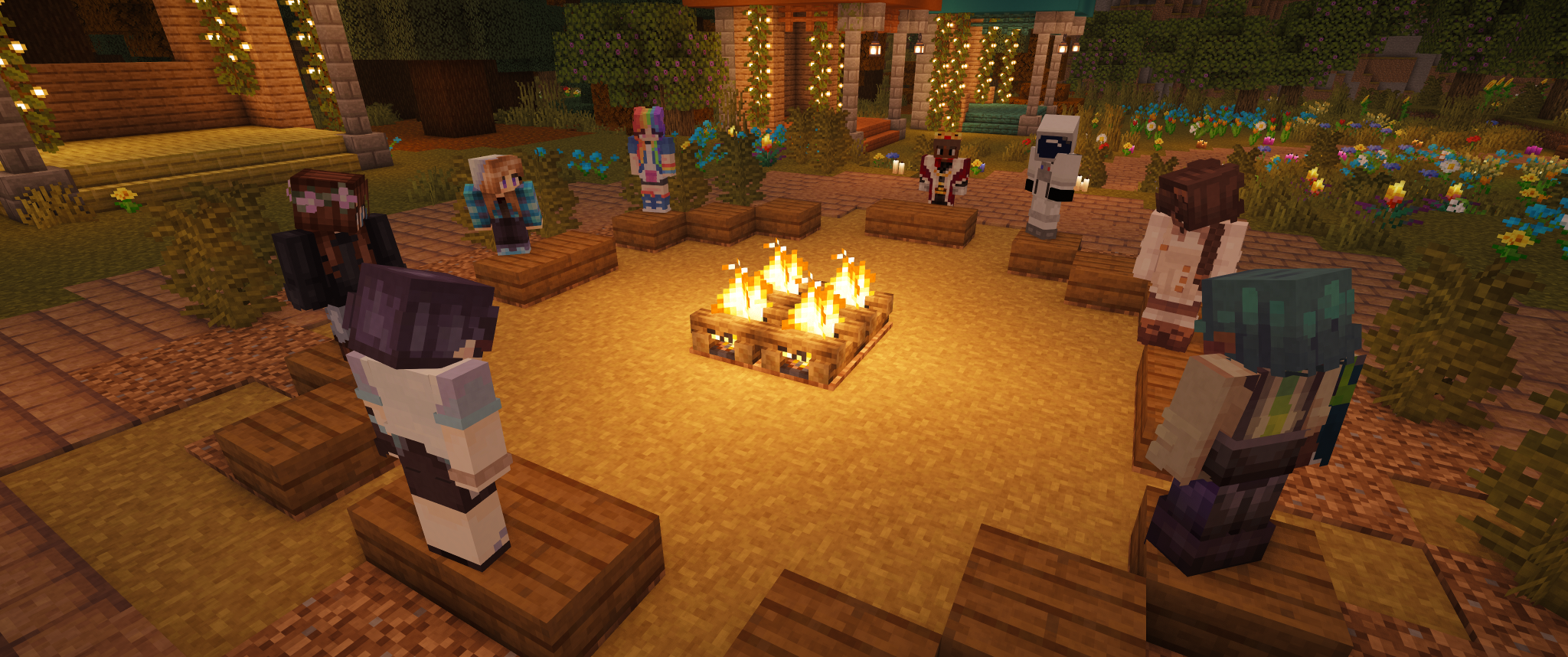
Second Haven is a moderated virtual community designed to offer meaningful connection, belonging, and shared adventure in the immersive open worlds of Minecraft.
We are co-creating a kind and welcoming virtual world for people of all ages with a special focus on young people who are marginalized, chronically ill, neurodiverse, isolated, or want to be a supportive friend to others who are struggling. In Second Haven, we can build together, go on adventures, and connect without pressure.
At its core, Second Haven is about belonging. We believe digital spaces can do more than entertain or occupy attention. They can help people feel included, valued, and connected to something larger than themselves. Minecraft gives us a powerful foundation for that work because it is already familiar to so many. It supports endless creativity and positive multiplayer experiences. We use that foundation to create a space that encourages shared purpose, imagination, teamwork, and ongoing community.
Second Haven is already a functioning, moderated community. As we grow, we are expanding it with more intentional group experiences, including guided adventures, collaborative quests, and peer-supported activities designed to strengthen connection and make participation easier for young people who may feel left out, overwhelmed, or disconnected elsewhere.
We care deeply about creating a space that is safe and human. That means active moderation, a strong community culture, support for new players, and thoughtful attention to how people enter and experience the space. Some members come ready to jump in. Others need time, reassurance, or a lower-pressure way to participate. Both belong here.
Second Haven is for people seeking a digital space where friendship, creativity, and belonging can grow.
Mission Statement
Our mission is to create safe, engaging, story-rich digital spaces where people can connect and belong.
Why is it called Second Haven?
The word haven suggests safety, refuge, and the feeling that you can be yourself. That part needs little explanation.
The idea of a second haven grows partly out of the idea of “third spaces,” those places outside home and work or school where people gather, connect, and feel part of a wider social world. Parks, libraries, cafes, neighborhood hangouts, and community centers can all serve that role. They matter because people need places where connection can happen naturally.
But many young people do not have enough spaces like that anymore. Some feel excluded. Some are isolated. Some are overwhelmed by social pressure, family stress, identity struggles, mental health challenges, or communities that do not feel safe or welcoming. And increasingly, much of life is already happening online.
We believe digital spaces can become more than noise, escape, or performance. They can become real places of refuge and connection.
Second Haven is named for that possibility: a shared haven built in a virtual space, where belonging can grow through creativity, kindness, and shared experience. When the world feels fragmented, lonely, or hard to enter, a second haven can still be made, together.